Blood is Blood Community Rally
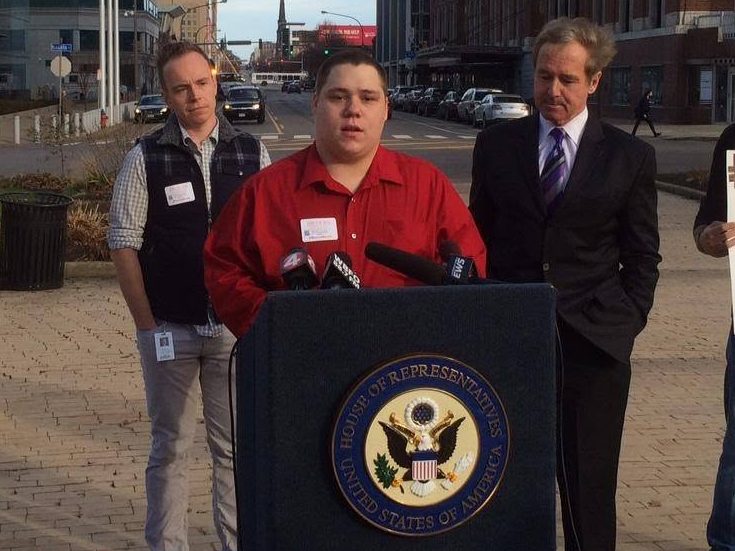
On December 14, 2015, Blood is Blood held its first Community Rally for Equality in Blood Donation, marking the organization's first major public advocacy event.
The rally brought together elected officials, community leaders, advocates, and supporters united behind the call for science-based, equitable blood donation policies. Among those in attendance were U.S. Representative Brian Higgins, Matthew Crehan-Higgins, then-Executive Director of the Pride Center of WNY, along with numerous local officials and members of the community.
The event drew significant media attention throughout Western New York, with coverage from Spectrum News, WIVB-TV, WKBW-TV, and Loop Magazine, helping bring regional attention to the need for modern, evidence-based blood donation policies and greater equality for LGBTQ+ donors.
Founded by Jordan James just weeks earlier, Blood is Blood was created in response to the federal blood donation policy that prevented many gay and bisexual men from donating blood. Rather than allowing that experience to create division, the organization chose a different path—bringing together community members, healthcare partners, elected officials, advocates, and supporters to call for science-based, equitable blood donation policies while encouraging everyone who was eligible to donate blood.
The rally served as a public call for change, emphasizing that blood donor eligibility should be based on individual risk and scientific evidence, rather than broad restrictions based solely on sexual orientation.
A Rally That Sparked a Movement
Building Trust in Science Through Advocacy
From its beginning, the Blood is Blood Community Rally focused on collaboration instead of confrontation. Blood is Blood worked to foster respectful conversations between the LGBTQ+ community, blood collection organizations, healthcare professionals, elected officials, and the public.
The message was simple:
- Every patient deserves access to lifesaving blood.
- Every eligible person should have the opportunity to donate.
- Public policy should continue to evolve alongside scientific evidence.
- Education and partnership are essential to strengthening the nation's blood supply.
The rally demonstrated that advocacy and public health can work together to create meaningful change.
A Lasting Impact
The Community Rally became the foundation for everything that followed.
In the years after the rally, Blood is Blood expanded its mission by:
- Partnering with the American Red Cross to promote blood donation and public education.
- Advocating through each stage of the FDA's evolving blood donor eligibility policies—from the 2015 transition from a lifetime deferral to a 12-month deferral, to the 2020 reduction to a 3-month deferral, and ultimately the 2023 adoption of individual, risk-based donor eligibility screening.
- Launching the first Gay Alliance Blood Drive in 2016, later renamed the Pride Alliance Blood Drive. Establishing the nation's longest-running LGBTQ+ Pride-related blood drive.
- Expanding to a semiannual blood drive campaign beginning in 2021.
- Educating communities about blood donation, reducing stigma, and promoting evidence-based donor eligibility.
- Supporting the broader movement toward fair, science-based, individual, risk-based donor eligibility policies.
Today, Blood is Blood continues the work that began at the Community Rally by promoting education, encouraging blood donation, strengthening community partnerships, and advocating for equitable, science-based blood donation policies. Guided by the belief that every eligible individual should have the opportunity to help save lives through blood donation, the organization remains committed to advancing inclusion, public trust, and evidence-based policy.
Our Mission Continues
More than a decade later, the message remains the same: saving lives should unite us.
The Community Rally was never just about changing a policy. It was about creating a future in which every eligible person has the opportunity to help save lives through blood donation, in which decisions are guided by science, and in which compassion, education, and collaboration continue to strengthen communities.
From that day forward, people began to understand what Blood is Blood stood for—not division, but dialogue; not exclusion, but inclusion; and not politics, but the shared goal of saving lives.
The work that began on December 14, 2015, continues today, and Blood is Blood remains committed to building a more inclusive future for blood donation—one where every eligible individual has the opportunity to help save lives.
Approximate Lives Saved
Policy Changes Influenced